
Fruit tree grafting
Learn how to graft fruit trees using the technique of whip and tongue grafting on this half day workshop
Course Content
The workshop will encourage participants to develop practical skills in the propagation of fruit trees such as apple, pear, plum and cherry. We will discuss the commercial production of fruit trees and how fruit trees can be propagated on a smaller scale in the garden.
Experience will be gained in the use of a grafting knife, concentrating on the technique of whip & tongue grafting of apple varieties onto a rootstock. This type of grafting is carried out in early March and participants will be able to take home their own grafted tree.
Background information will be provided on the selection and purchase of rootstocks, collection of propagating material and growing on of the trees. Details will also be given about the availability of all the materials used during the day.
The techniques learned can also be applied to a wide variety of ornamental trees including cultivars of crab apple, flowering cherry, mountain ash, whitebeam, ash and maple.
These skills are useful to anyone who wishes to propagate fruit and ornamental trees commercially, or on a smaller scale in the garden.
The workshop will also cover the maintenance and sharpening of grafting knives. We will be using very sharp knives which should be handled with great care. A first aider will be available to administer plasters should the need arise.
Who is this course for?
The workshop will be of interest to gardeners and horticulturalists as well as the less experienced. No prior knowledge of grafting is needed. This workshop is open to anyone aged 16 or over.
The workshop involves working with grafting knives and tying materials.
Why do we teach this course?
This Fruit tree grafting course teaches traditional skills, connecting people with nature, supporting local food production and biodiversity.
Tools
We recommend that everyone who attends the workshop has their own good quality grafting knife.
The best quality grafting knives are made by Tina of Germany. The knife blades are made from a high quality steel which can be sharpened to a good edge. The knives are used commercially in the horticulture industry and are the best available, but they are expensive.
Cheaper knives with a good blade from Victorinox and Opinel. Victorinox Model 19200 can be used for grafting and Opinel make general purpose knife, Model 08, which has a decent blade.
A good quality, fine whetstone is also essential for knife sharpening:
Small sharpening stones with flat and curved surface, Codes G41 and G42
A good quality pair of secateurs is handy – we recommend Felco secateurs, model number 8 is Bryn’s favourite, but model numbers 4 and 5 are good and are cheaper (left-handed people should buy model number 9).
To get the most out of the course please bring all your own tools. We may have a very limited number of secateurs and grafting knives and a sharpening stone as back-up, but you don’t want to spend the whole afternoon waiting in turn for tools.
Course Tutors

Jim Arbury
Jim Arbury is an RHS Horticultural Specialist, specialising in fruit growing. He has used his expertise to identify apples at our Apple Day events in the past, and is the author of a number of books on fruit and propagation.
Becca Mann
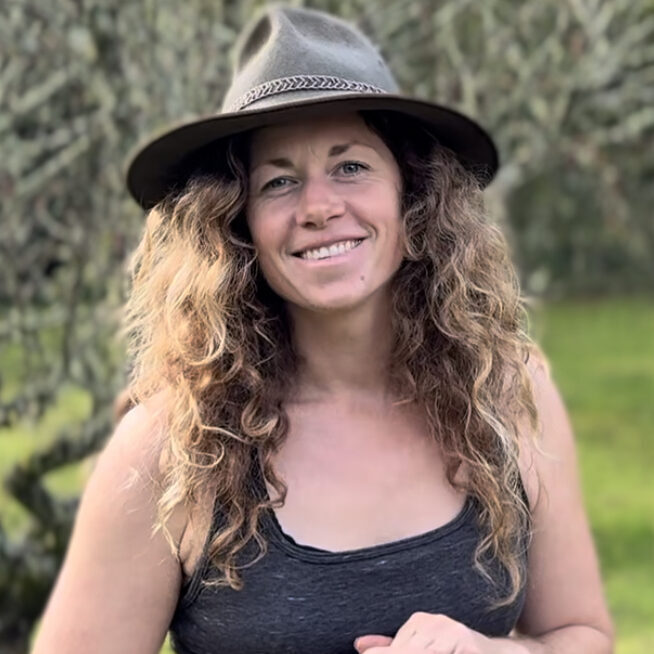
Becca will be assisting Jim on this course. Becca has a background in fruit growing and has designed gardens, run a market garden, and run courses on fruit tree renovation. She is passionate about bringing people together to grow, learn, share food and build community.
Course fees explained
Our fees are worked out on a fair share basis, to make sure we cover costs and make courses as accessible as possible.
Standard Rate
By choosing the Standard Rate, you're covering the basic costs of your place and helping sustain the work we do. Your contribution supports our mission and makes it possible for others on lower incomes to join our courses.
Pay it Forward Rate
If you’re in a position to pay the Pay it Forward Rate, thank you. Your generosity helps us subsidize places for other people who can’t afford the full cost.
Your contribution enables us to continue our charitable mission: Inspiring, Connecting, Learning – for people and planet to flourish.
Supported Rate
This reduced rate reflects our commitment to making participation possible for more people. Please only book on this rate if you are not able to cover the Standard rate.
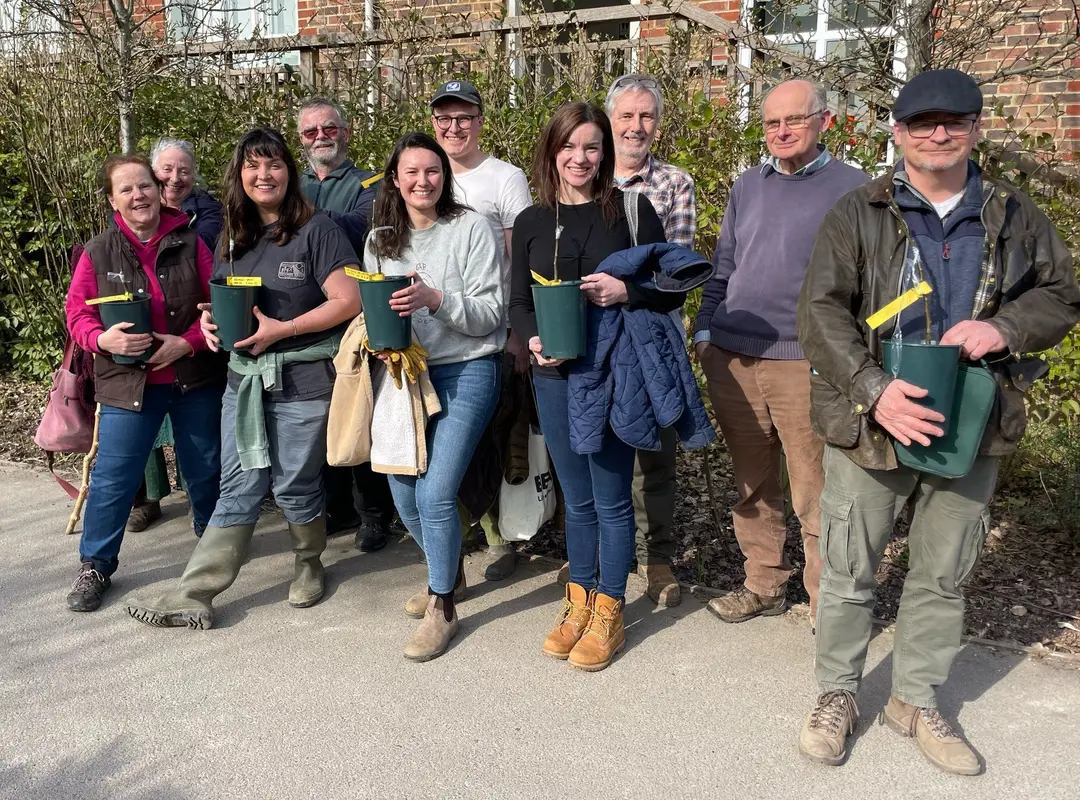
This half-day course runs from 1pm to 4pm
Venue
One Garden
Stanmer Park (near University of Sussex)
Brighton
Map & Directions
Fees
Fees include tuition, refreshments, handouts and information sheets.
Standard Rate
£145
Pay it Forward Rate
£170
Supported Rate
£90
Supported places are limited.
Our commitment to affordability relies on voluntary support.
ACCOMMODATION
If you intend to book accommodation, please check availability before booking a place, as accommodation in Brighton can be hard to find, especially over the summer months.
Get details of local accommodation and Brighton Permaculture Trust supporters who can provide accommodation in their homes.
BOOKING
Booking is essential, as most of our courses/events are fully booked weeks in advance. However, if places are still available, then bookings can be made until midday the day before the course/event. A place is not secured until we have received the requested payment.
If you have completed the booking process but you haven’t received a confirmation email from us please contact us to check your booking has gone through.
If you are booking within two weeks of the event, or the event is nearly full, you will not have the option to pay by BACS. Instead, you will need to pay immediately using a credit/debit card or PayPal.
ACCESSIBILITY
If you have any accessibility needs or concerns, please contact us in advance, and we will do our best to accommodate you.
Have questions?
For any enquiries or if you need further information, feel free to reach out. We’re here to help!