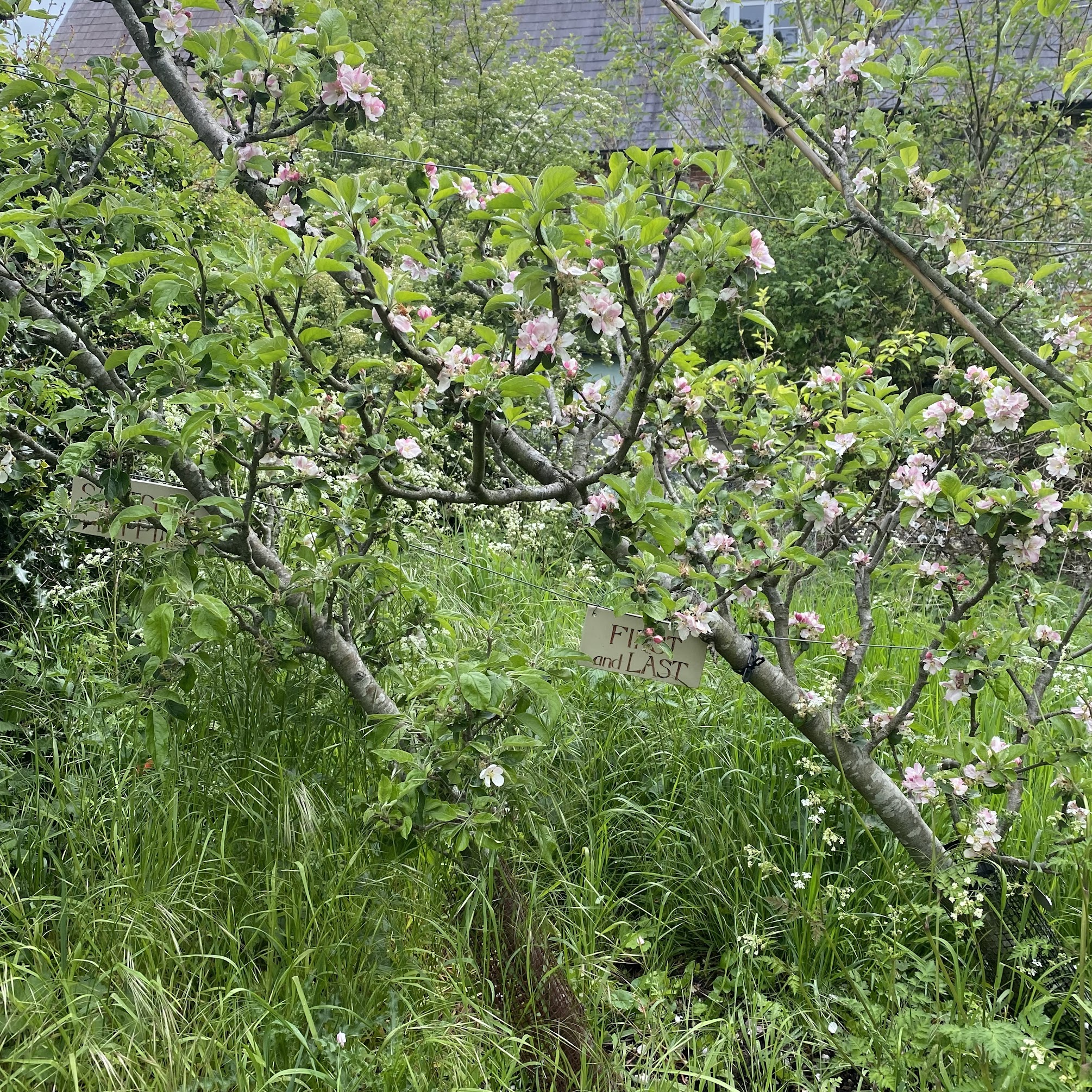
Planning and planting a small orchard
Learn the basics of fruit tree selection and planting techniques for gardens and small orchards. This course is designed to complement the Care of fruit trees course.
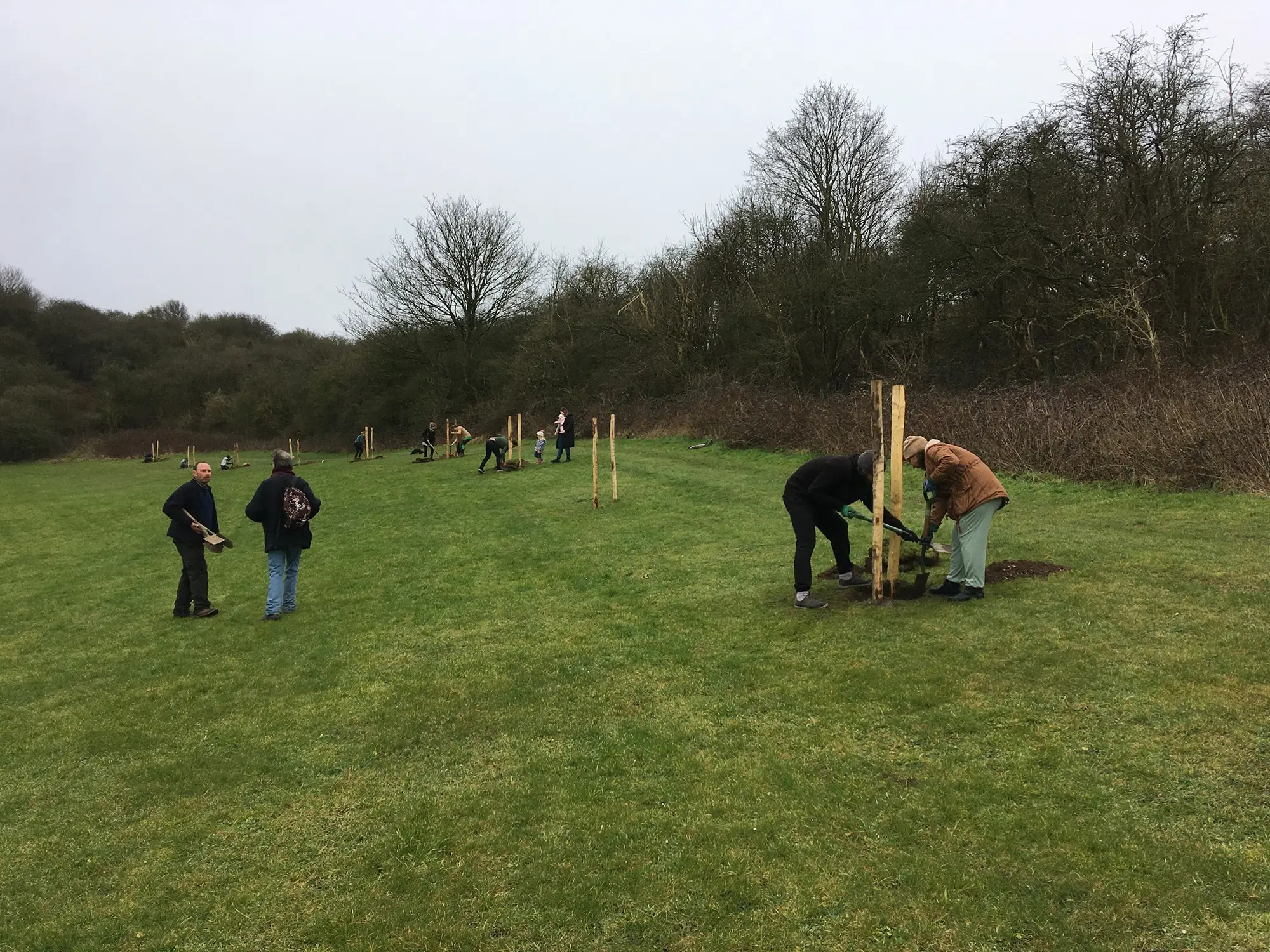
Dive into the exciting world of growing fruit trees in gardens and traditional orchards. We only touch on growing fruit trees in smaller spaces which is covered in more depth on our Growing fruit in small spaces course.
In this course, you will learn the basics of fruit tree selection and planting, including:
- soil types
- shade
- spacing
- rootstocks
- pollination groups
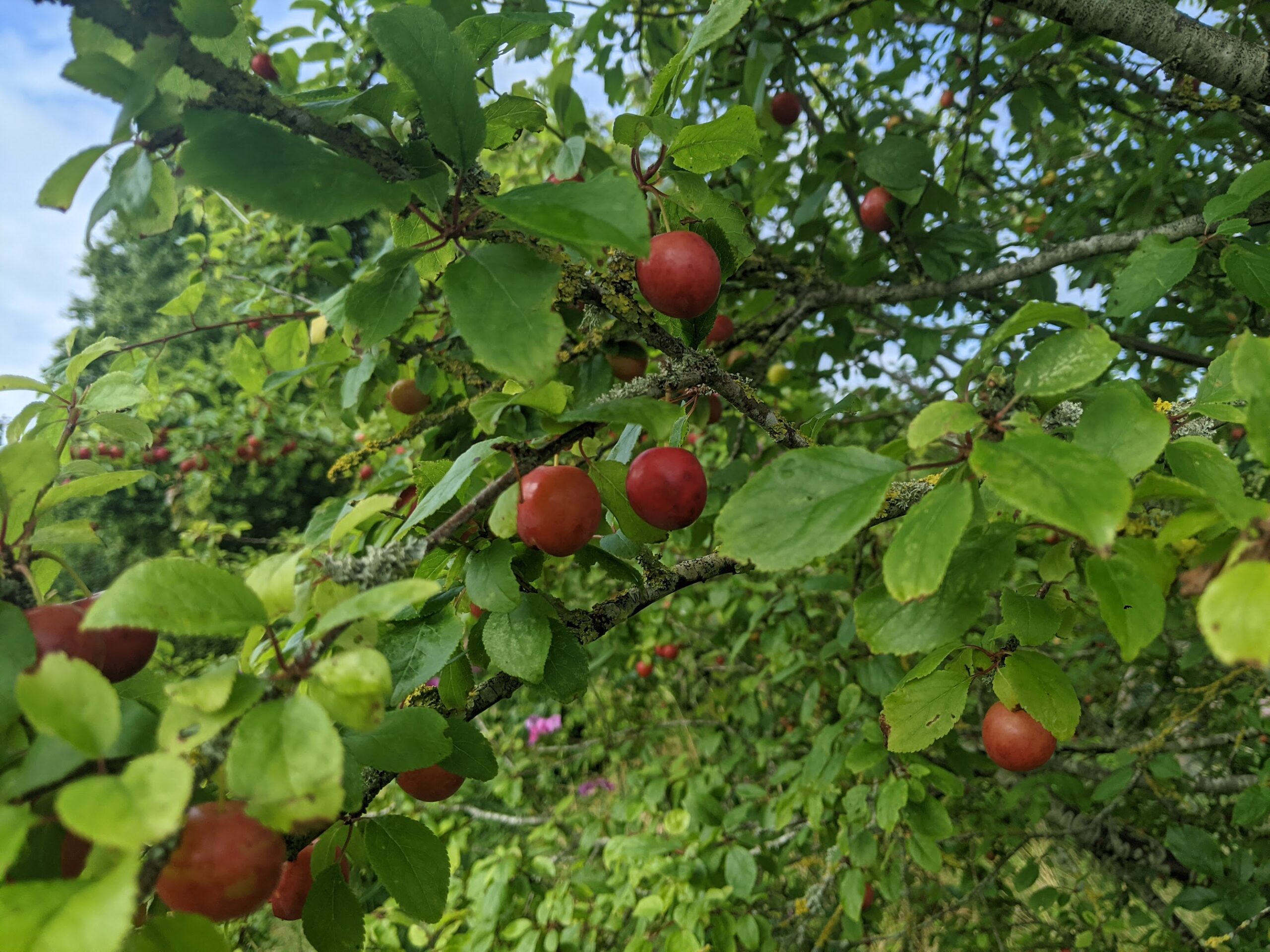
- apple and pear varieties
We will also discuss companion planting and integrating fruit trees into forest gardens.
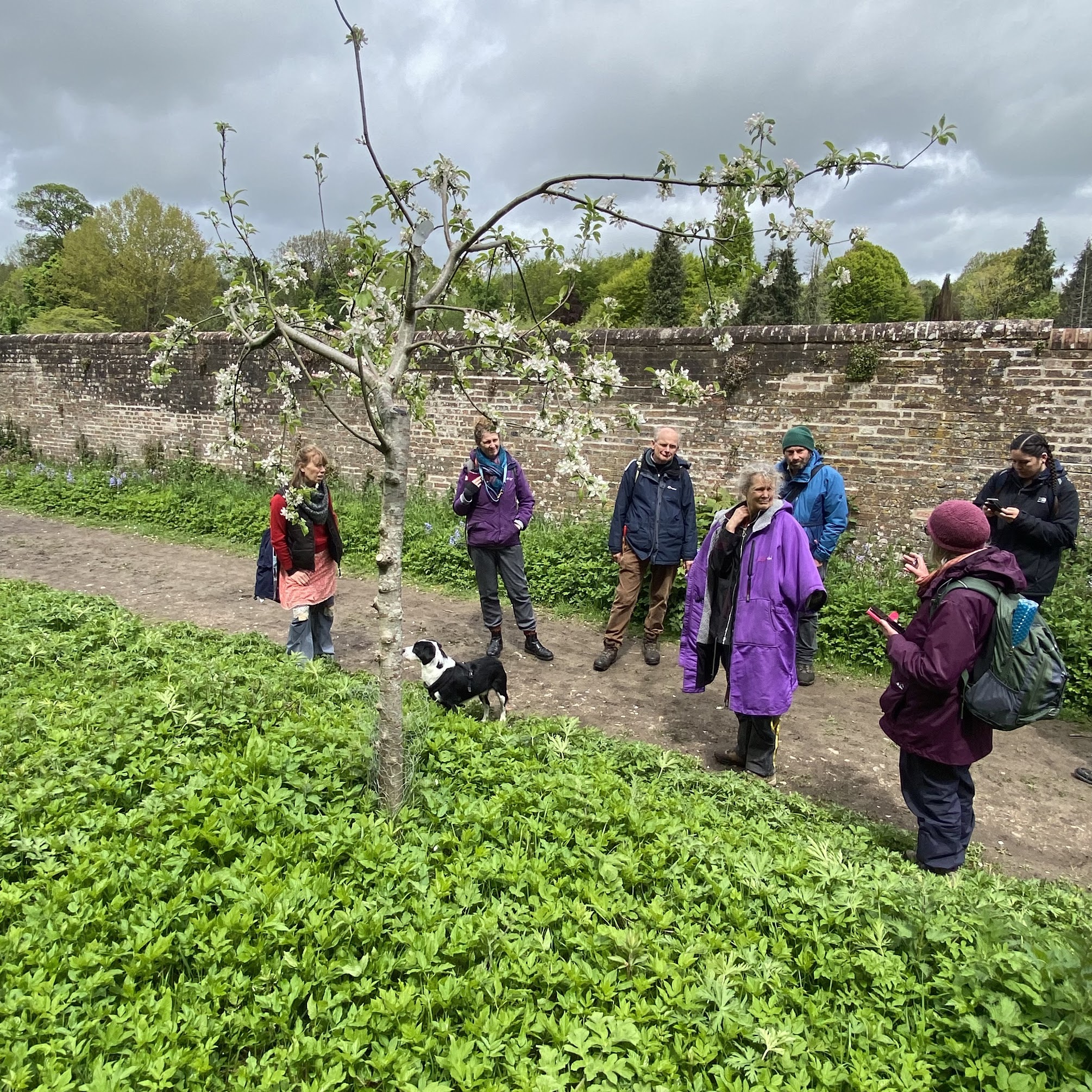
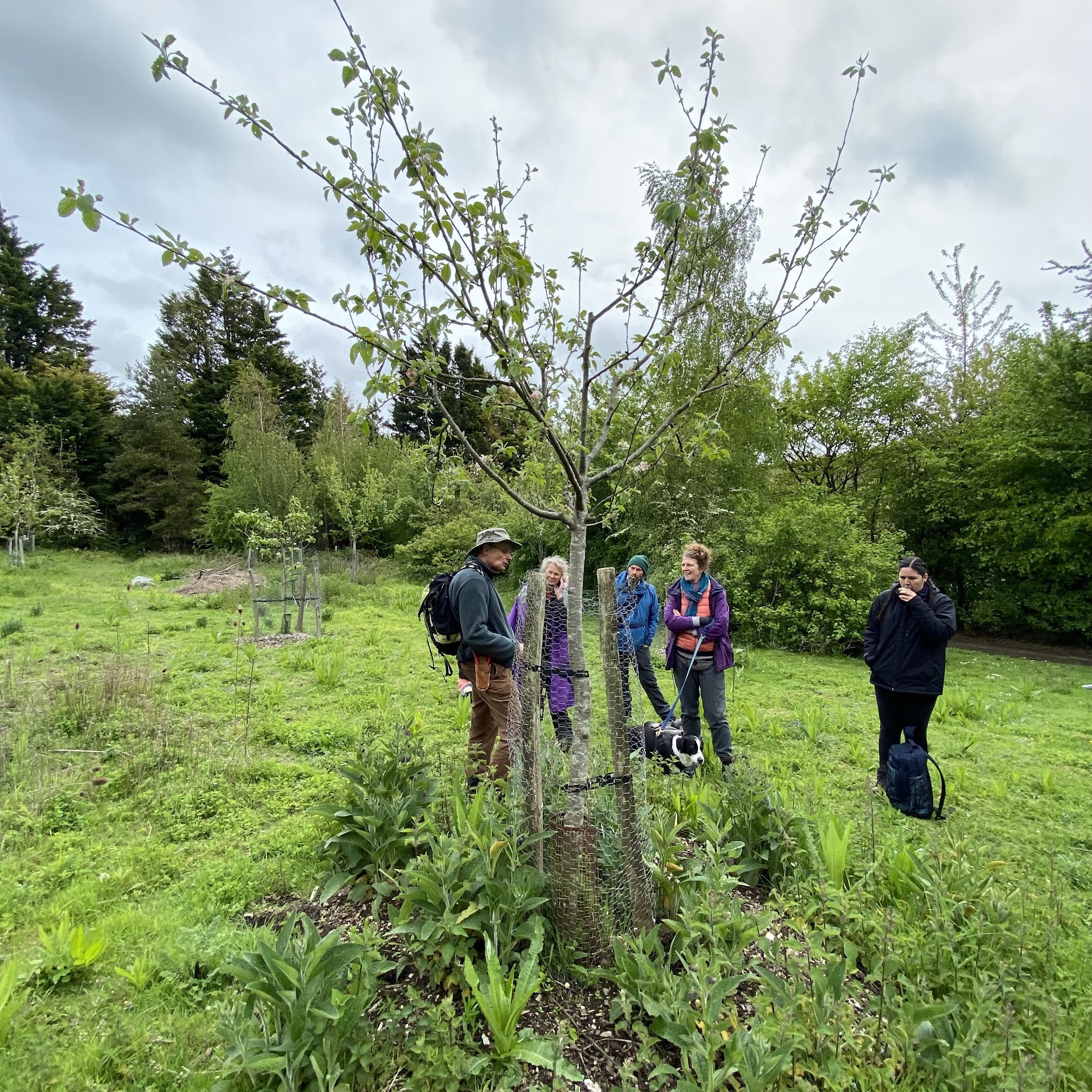
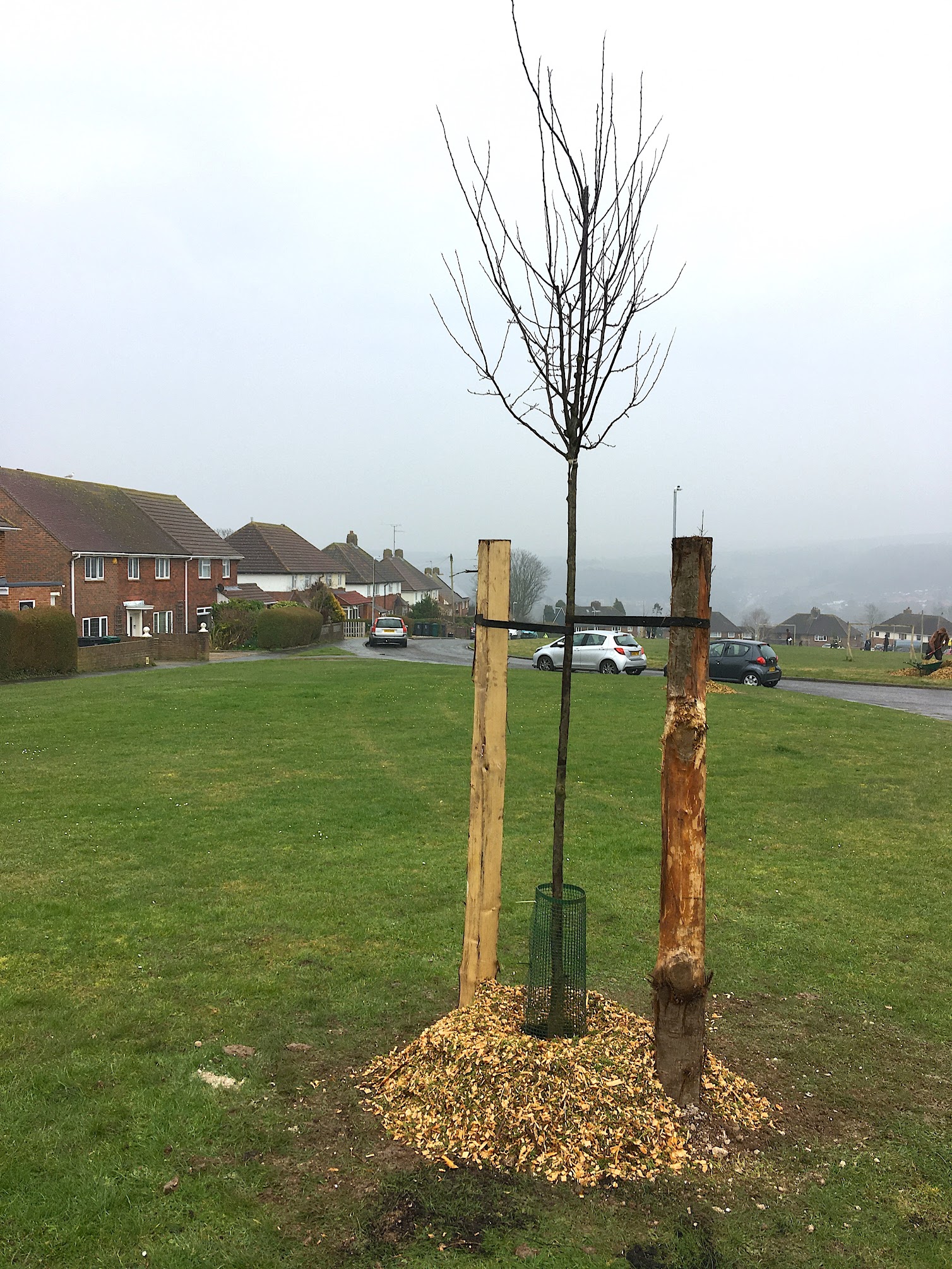
Together, we will get our hands dirty planting fruit trees using the best techniques and materials to give them a fantastic start, no matter the conditions. We will also brainstorm creative ways to involve children and community members in the planting fun.
Who is this course suitable for?
This course is suitable for anyone who is 16 years old or older and no previous experience in pruning is required.
Be prepared to spend a lot of time outdoors, whatever the weather. We will walk up to 2 miles, and some areas may have uneven ground. We will use ladders to prune certain trees, although there are also trees that can be pruned without needing to leave the ground.
Why do we teach this course?
Fruit trees provide a valuable habitat for wildlife and can produce food for up to 100 years. Brighton Permaculture Trust has been planting small orchards in schools and urban spaces across Sussex.
Our planning and planting a small orchard course teaches traditional skills, connects people with nature, supports local food production and biodiversity.
Recommended introductory material
This book is recommended but it is not necessary for those attending to buy/read it.
RHS Pruning and Training, Christopher Brickell and David Joyce (Also available elsewhere)
Tools
We would strongly advise that anyone who intends to prune trees should have good tools. Poorer tools are a false economy; they are harder work, give inferior results and do not last. Please bring your own tools if you have them but we do have a small supply of tools to lend to people on the course. We recommend the following tools, which are not available from the shops and are best bought well in advance:
- A good quality pair of secateurs – we recommend Felco secateurs, model number 8 is Bryn’s favourite, but model numbers 4 and 5 are good and are cheaper (left-handed people should buy model number 9). A leather holster is also recommended.
- A good quality pruning saw – we recommend Silky saws. The Gomtaro 300 models are most universally useful and come with a holder that attaches to your belt, making them safer to carry when not in use, especially up ladders where the saw can easily be accessed with one hand while the other hand holds the ladder. The fine toothed blades (13 teeth per inch) make better quality cuts than the large toothed ones (8 teeth per inch) but are a little slower to use; replacement blades are available. You can find it here.
Course Tutors
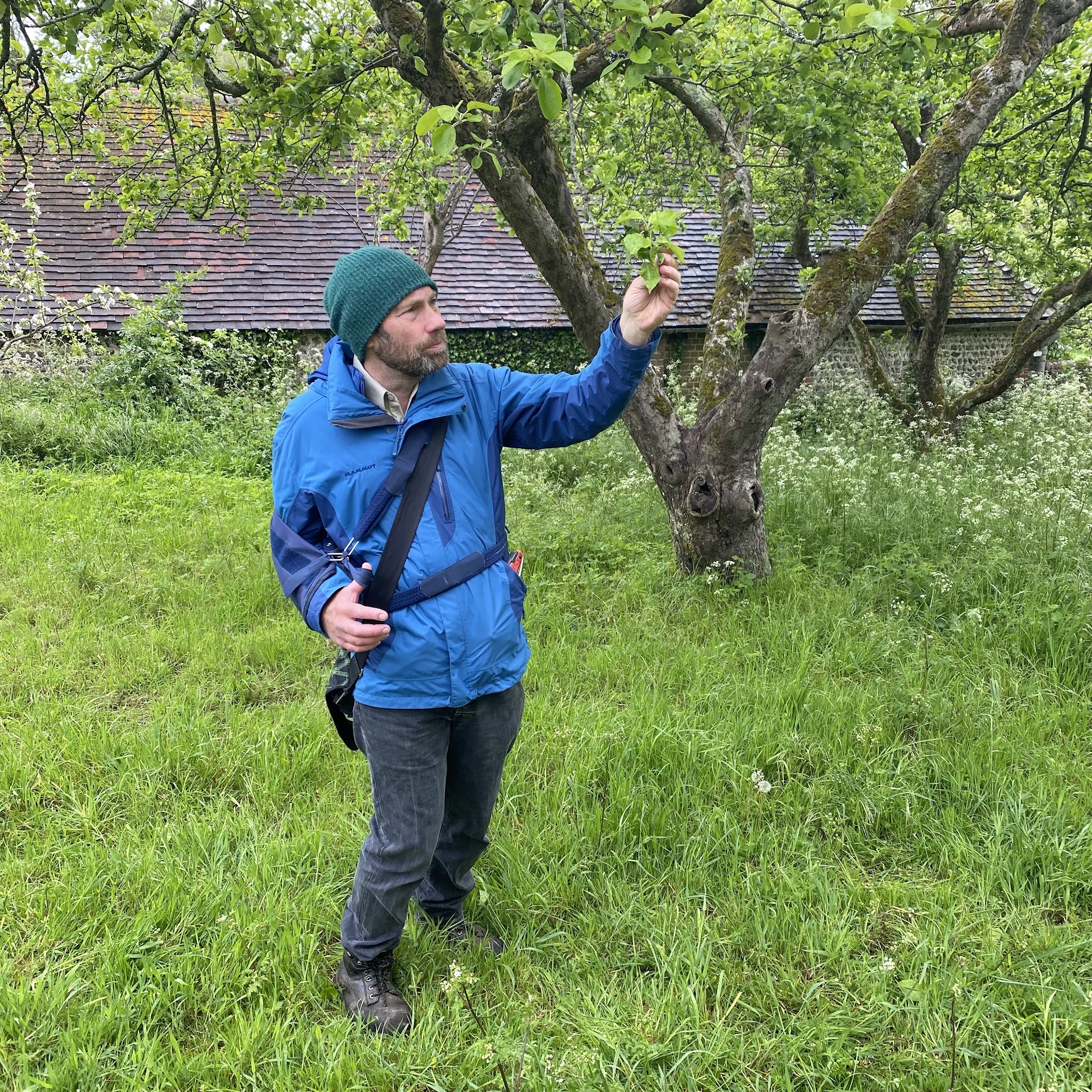
Bryn Thomas
Bryn will lead both the theory and practical sessions.
He is an experienced tutor and trainer who has been teaching permaculture since 1994. A co-founder of the Brighton Permaculture Trust, Bryn has a lifelong passion for fruit and everything fruit-related. His work champions the vision of an “orchard city,” where communities are enriched by abundant, productive trees. His areas of expertise include fruit growing, pruning, forest gardening and green architecture.
Bryn has been pruning old fruit trees since the mid-90s.
Course reviews & feedback
This one-day course runs from 9.30am to 4.00pm in Stanmer Park, Brighton.
2026 Course
New dates to be announced.
Venue
Stanmer Park (near University of Sussex)
Brighton
Map & Directions
Fees
Fees include tuition, refreshments, handouts and information sheets.
Sponsored / Organisation rate
£175
Individual income: more than 25k/yr
£175
Individual income: 18-25k/yr
£140
Individual income: less than 18k/yr
£105
Individual: Concessionary rate
£56.00
(check eligibility)
Concessionary places are limited.
Our commitment to affordability relies on voluntary support.
ACCOMMODATION
If you intend to book accommodation, please check availability before booking a place, as accommodation in Brighton can be hard to find, especially over the summer months.
Get details of local accommodation and Brighton Permaculture Trust supporters who can provide accommodation in their homes.
BOOKING
Booking is essential, as most of our courses/events are fully booked weeks in advance. However, if places are still available, then bookings can be made until midday the day before the course/event. A place is not secured until we have received the requested payment.
If you have completed the booking process but you haven’t received a confirmation email from us please contact us to check your booking has gone through.
If you are booking within two weeks of the event, or the event is nearly full, you will not have the option to pay by BACS. Instead, you will need to pay immediately using a credit/debit card or PayPal.
ACCESSIBILITY
If you have any accessibility needs or concerns, please contact us in advance, and we will do our best to accommodate you.
A first aider will be available throughout the course. Our first aiders are trained to administer adrenaline auto-injectors in an emergency and to assist participants with their own asthma inhalers. If you carry an adrenaline auto-injector or may need support with your own asthma inhaler, please let our first aider know where it is kept when you arrive. First aiders cannot legally administer any other medication for existing medical conditions.
Have questions?
For any enquiries or if you need further information, feel free to reach out. We’re here to help!
Gallery