 Someone once described the permaculture ethics as like the rules of a game.
If you want to create a permaculture design, your design should aim to follow the three rules: Earth Care, People Care, and Fair Shares.
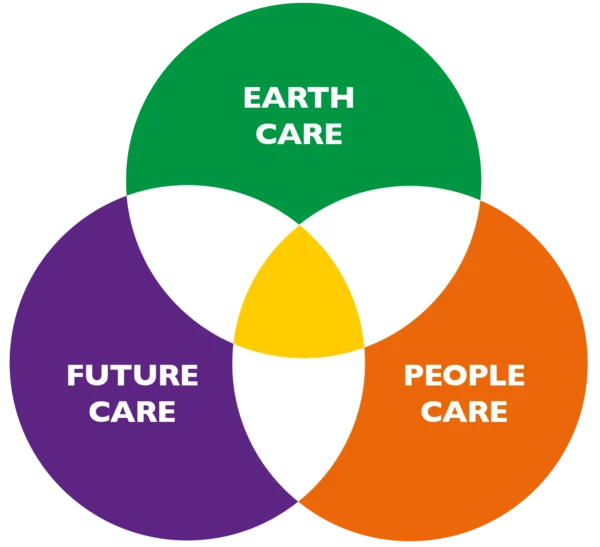
The three ethics are often shown as a Venn diagram — a visual reminder that the goal is to design in a way that balances and overlaps all three.
Earth care
Earth care is about looking after and rebuilding the natural world. It’s often represented by a plant, but it goes far beyond that — caring for soil, water, air, and all other living species.
People care
People care is about meeting human needs. That includes basics like food, water, and clean air, but also companionship, joy, community, and fulfilment.
Fair shares
Fair shares is about recognising limits and creating balance. It asks us to consume only what we need, redistribute surplus, and ensure resources are shared fairly. Crucially, it also considers the needs of future generations, reminding us to use natural resources in ways that don’t diminish what will be available to those who come after us.
These ethics aren’t unique to permaculture; many cultures and communities live by similar values. But when a permaculture design honours all three, it’s more likely to have a positive social and environmental impact, use fewer inputs, create less waste, and generate abundance to share.
In short, it’s about designing for sustainability and regeneration.
The permaculture principles then offer practical ways to put these ethics into action.