If the permaculture ethics are like the rules of the game, then the principles are more like the guidelines to get better at playing it. They don’t provide ready-made answers — instead, they help you ask the right questions and figure things out for yourself.
As with any game, different players develop slightly different guidelines.
How the principles have developed
Permaculture was co-created in the 1970s by Bill Mollison and David Holmgren, drawing on observations of natural systems and long-term human communities.
Early versions included a short list of principles, but over time these evolved into various lists depending on the author. In 2002, Holmgren published a set of twelve principles that have since become the most widely used.
Holmgren’s 12 permaculture principles
- Observe and interact – take time to notice what’s happening before you act.
- Catch and store energy – make use of abundance now to have resources later.
- Obtain a yield – design so that your work produces something useful.
- Apply self-regulation and accept feedback – learn from mistakes and adjust.
- Produce no waste – find ways to reuse, recycle, or repurpose.
- Use renewable resources and services – work with what nature can replenish.
- Design from pattern to detail – start with the big picture, then refine.
- Integrate rather than segregate – build connections so that things support each other.
- Use small and slow solutions – start simple, grow steadily.
- Use and value diversity – encourage variety for strength and resilience.
- Use edges and value the marginal – look to the overlooked; that’s where innovation thrives.
- Creatively use and respond to change – treat change as an opportunity, not just a challenge.
These principles can be applied in many contexts — from designing a garden to shaping an organisation.
You can download Holmgren’s principles cards (PDF) and carry them as a pocket reminder. Simply print the sheet, cut out the cards, and keep them handy — whether in your wallet, notebook, or pinned up somewhere you’ll see them often.
Examples from Brighton Permaculture Trust
Observe and interact
Before starting our plot design at Stanmer Park, we spent time observing the site and talking with people previously involved. This helped us understand both the opportunities and the challenges.
Catch and store energy
Our scrumping project puts this principle into action. Fruit trees produce an abundance of energy, which is often wasted if fruit is left unpicked. By harvesting and transforming it into juice, jams, and chutneys, we “catch” and “store” that energy as food resources.
Creatively use and respond to change
Since Brighton Permaculture Trust was founded in 2000, we’ve been continually evolving. The involvement of founders has shifted, new people have joined, and our projects have adapted to changing resources and challenges. This flexibility has helped us stay resilient.
Integrate rather than segregate
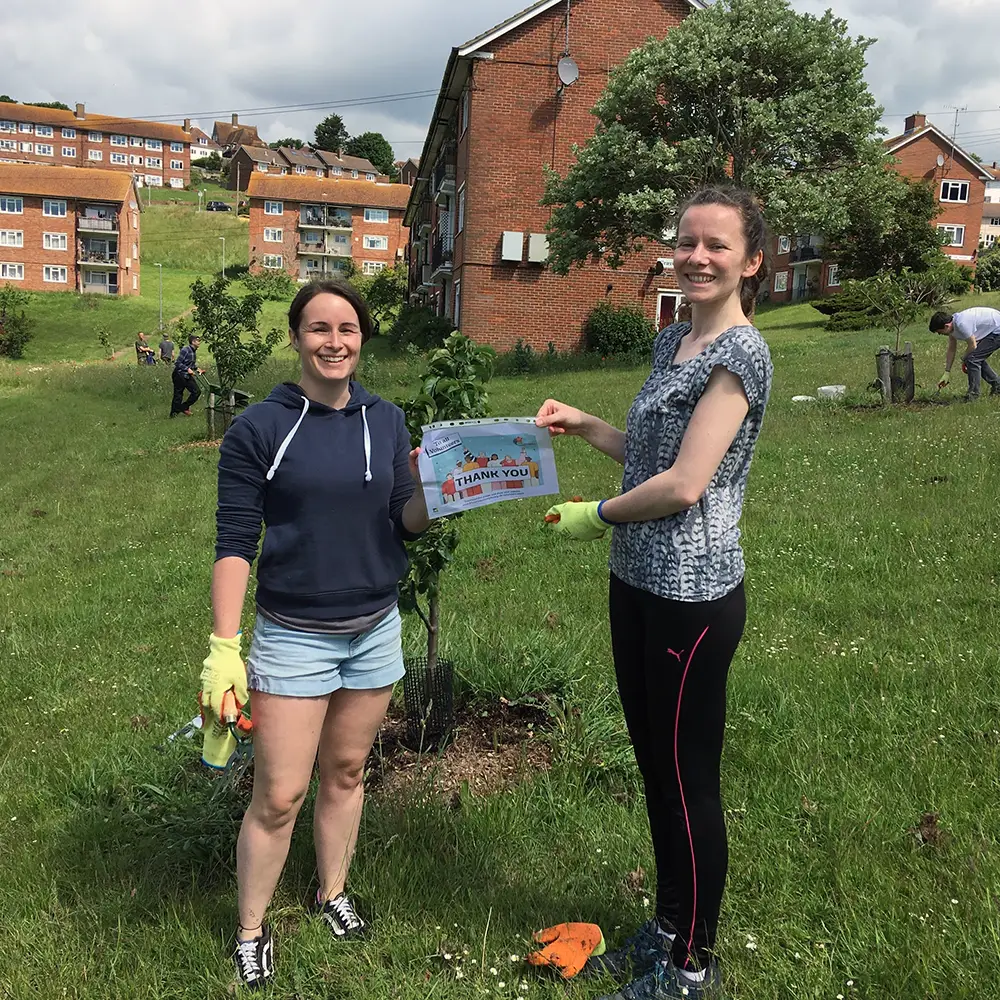
We’ve built strong relationships with organisations in Stanmer Park, the council, and local community groups. These connections have allowed collaborative projects, such as the community orchards, to thrive.
Can you see how the permaculture principles might be useful in many different situations?
Find out more at the Permaculture Association’s website.